peptides
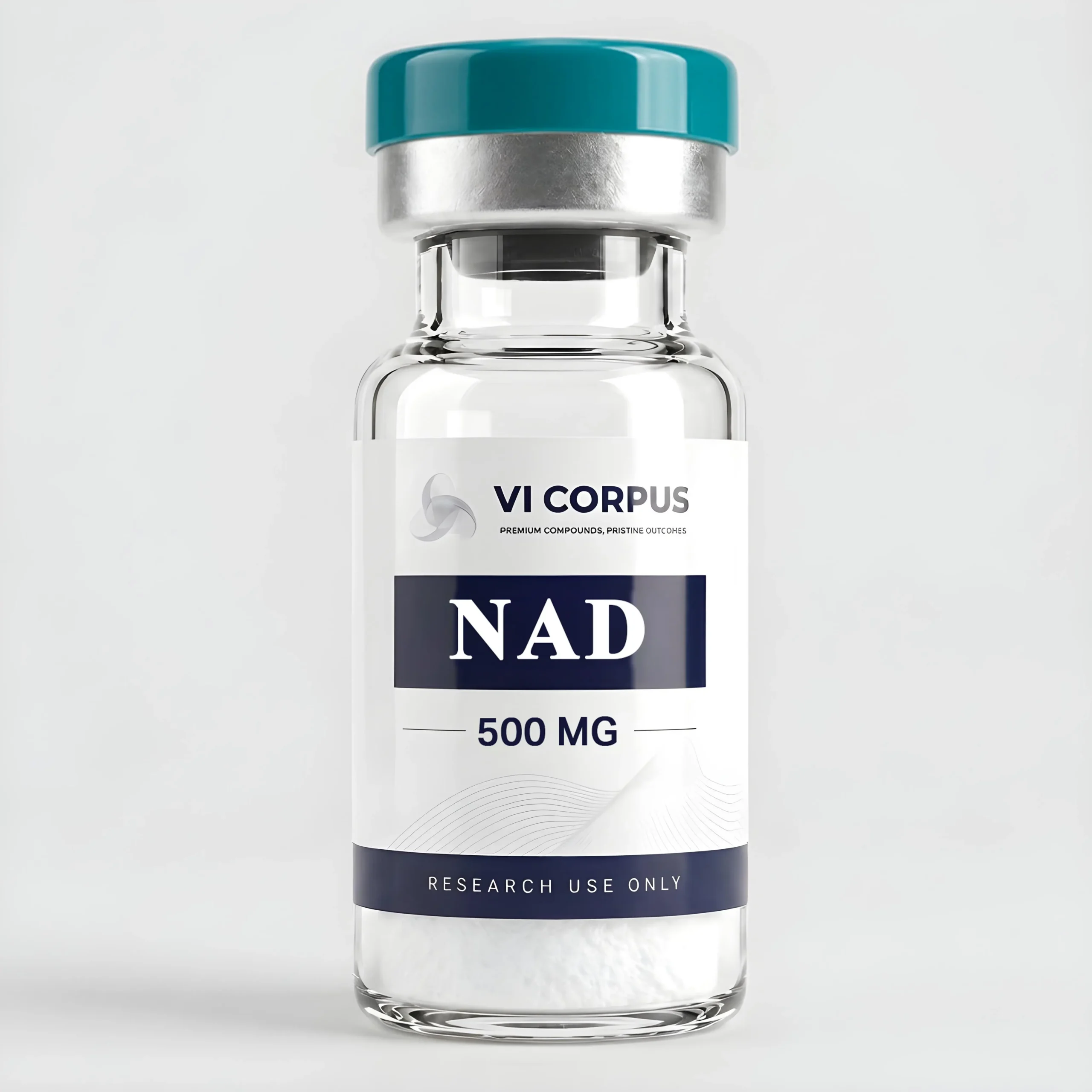
NAD (500 MG) - Nicotinamide Adenine Dinucleotide
Peptide · Research Grade · Lyophilized
38 sold this week
Select a bundle above to unlock your discount
About this product
NAD500 (Nicotinamide Adenine Dinucleotide)
NAD500 contains Nicotinamide Adenine Dinucleotide (NAD+), a central coenzyme involved in cellular energy metabolism and redox reactions. NAD+ plays a critical role in mitochondrial ATP production, DNA repair pathways, and cellular signalling processes. Due to its involvement in oxidative phosphorylation and sirtuin activation, NAD+ is widely studied in ageing research, metabolic regulation, and neuroprotection models.
Declining NAD+ levels have been associated with ageing and metabolic dysfunction in preclinical and clinical studies. As a result, NAD500 is utilised in laboratory settings to investigate cellular bioenergetics, mitochondrial function, oxidative stress response, and longevity-related mechanisms.
Product Summary Table
| Chemical Name | Nicotinamide Adenine Dinucleotide (NAD+) |
| Molar Mass | 663.43 Da (oxidised form) |
| Chemical Formula | C21H27N7O14P2 |
| Synonyms | NAD+, Nicotinamide Adenine Dinucleotide |
| Classification | Redox Coenzyme / Metabolic Cofactor |
| Form | Lyophilised powder for reconstitution |
| Country of Origin | Australia |
| Storage | Store refrigerated between 1–4°C after reconstitution. Protect from light. |
| Standard | Research Purity ≥98% |
In Vivo Research Benefits
- Supports Cellular Energy Production: Essential for mitochondrial ATP generation through oxidative phosphorylation and electron transport chain activity.
- DNA Repair and Genomic Stability: Required for PARP enzyme activity involved in DNA damage repair pathways.
- Sirtuin Activation Research: Functions as a substrate for sirtuin enzymes linked to ageing, metabolic regulation, and cellular stress resistance.
- Neuroprotection Studies: Investigated for its role in supporting neuronal survival and reducing oxidative stress.
- Metabolic Function Research: Studied in models of insulin sensitivity, mitochondrial dysfunction, and age-related metabolic decline.
Dosage and Administration
- Dosage: Determined according to experimental design and research protocol.
- Form: Lyophilised compound requiring reconstitution.
- Usage: Intended for laboratory research involving metabolic pathways, mitochondrial bioenergetics, and cellular longevity mechanisms.