peptides
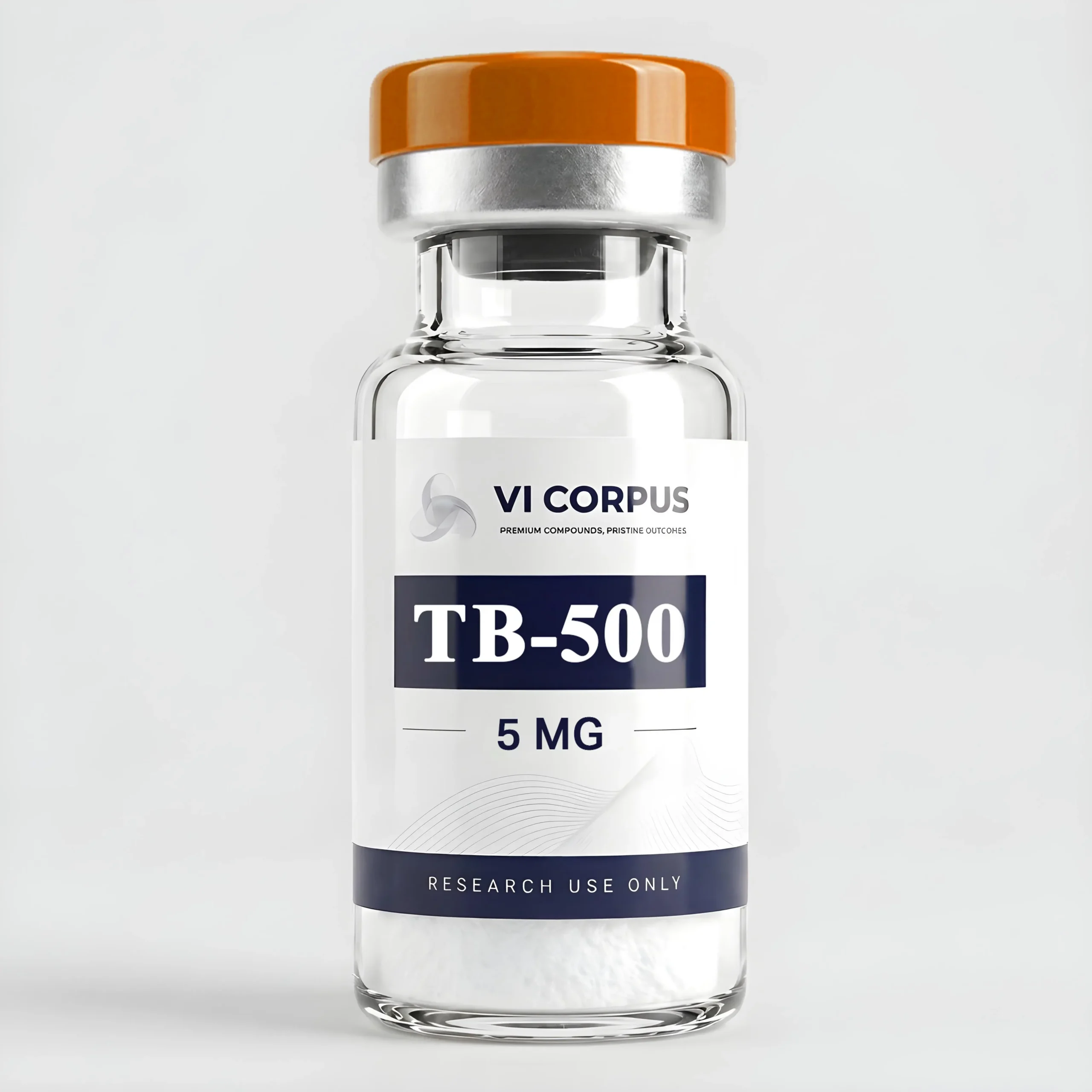
TB-500
Peptide · Research Grade · Lyophilized · Recovery
31 sold this week
Select a bundle above to unlock your discount
About this product
TB-500 is a synthetic 43-amino acid peptide that mirrors the endogenous protein Thymosin Beta-4 (Tβ4), a ubiquitous molecule found in virtually all nucleated cells. Thymosin Beta-4 plays a central role in actin sequestration — binding G-actin monomers to regulate cytoskeletal dynamics, cell migration, and tissue remodelling. The peptide's ability to upregulate actin polymerisation underlies its studied relevance in wound healing, angiogenesis, and regenerative processes.
In preclinical research, TB-500 has been examined across multiple tissue systems — including skeletal muscle, cardiac tissue, skin, and connective tissue — with findings suggesting broad activity in promoting cellular repair, reducing inflammatory markers, and supporting neovascularisation following injury models.
Product Summary Table
| Name | TB-500 (Thymosin Beta-4 Acetate) |
| Synonyms | Tβ4, Thymosin Beta 4, TB500 |
| Molar Mass | 5,055.84 Da (approximately) |
| Chemical Formula | C₂₁₂H₃₅₀N₅₆O₇₈S |
| Sequence Length | 43 amino acids |
| Classification | Synthetic regenerative peptide / Actin-binding protein analogue |
| Purity | Research grade ≥98% |
| Form | Lyophilised powder (requires reconstitution) |
| Storage | Store lyophilised at −20°C. After reconstitution, store at 1–4°C. |
| Country of Origin | Australia |
In Vivo Research Benefits
- Accelerated Wound Healing: Topical and systemic administration of Thymosin Beta-4 in rodent models demonstrated increased re-epithelialisation rates of up to 42% over saline controls at 4 days post-wounding, and up to 61% at 7 days, attributed to enhanced keratinocyte migration and actin remodelling.
- Skeletal Muscle Regeneration: Animal studies of skeletal muscle injury showed TB-500 administration was associated with accelerated myofibre repair, increased satellite cell proliferation, and a measurable reduction in fibrotic scarring in recovered tissue.
- Cardiac Tissue Protection: Tβ4 has been studied following coronary artery ligation models, with findings of enhanced cardiomyocyte survival, improved cardiac function, and stimulation of endogenous cardiac progenitor activation. Research suggests it retains cardioprotective properties postnatally.
- Angiogenic Activity: TB-500 promotes endothelial cell migration and new blood vessel formation, supporting tissue perfusion in ischaemic and injured regions — a mechanism studied in both wound repair and cardiac recovery models.
- Anti-inflammatory Properties: Research has identified Tβ4's role in downregulating pro-inflammatory cytokines and modulating macrophage activity at sites of tissue damage, potentially contributing to improved recovery outcomes in injury models.
- Connective Tissue and Joint Support: Preclinical data indicate structural improvements in connective tissue integrity following TB-500 administration, including tendon and ligament models, attributed to collagen synthesis upregulation and fibroblast activity.
Dosage and Administration
- Form: Lyophilised powder. Reconstitute using bacteriostatic water prior to use. Standard reconstitution volume varies by research protocol — typically 1–2 mL of bacteriostatic water per vial.
- Administration Route: Subcutaneous or intramuscular injection, consistent with published in vivo research protocols.
- Research Protocol Reference: In published preclinical studies, Tβ4 dosing in rodent models has ranged from 150 µg administered twice weekly over extended periods, to acute bolus dosing in cardiac injury studies. Protocols vary considerably by tissue target, injury model, and study duration. No standardised human dosing protocol currently exists in the published literature.
- Storage & Handling: Keep lyophilised vials at −20°C until reconstitution. Once reconstituted, store at 1–4°C and use within the timeframe indicated by your research protocol. Avoid repeated freeze-thaw cycles. This product is intended for in vitro and in vivo research use only and is not approved for human therapeutic use.