pct
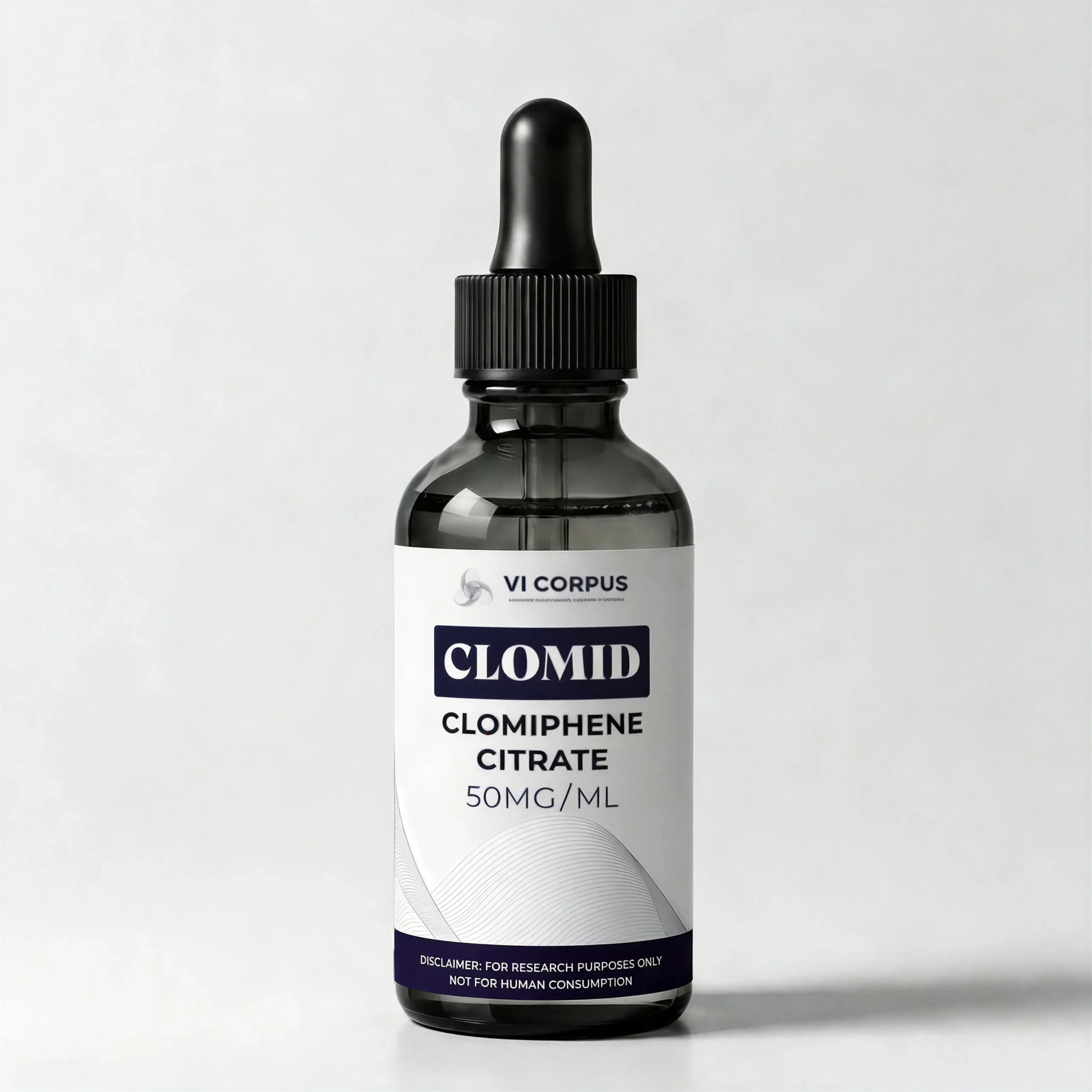
Clomid - Clomiphene Citrate
PCT · Recovery
38 sold this week
Select a bundle above to unlock your discount
About this product
Clomiphene Citrate is a non-steroidal selective estrogen receptor modulator (SERM) that acts primarily at the level of the hypothalamus. By competitively binding to estrogen receptors, it interrupts the negative feedback loop that estrogen exerts on gonadotropin secretion, resulting in elevated luteinising hormone (LH) and follicle-stimulating hormone (FSH) output from the pituitary gland.
In preclinical and clinical research settings, Clomiphene Citrate has been studied extensively for its role in modulating the hypothalamic-pituitary-gonadal (HPG) axis. It is recognised in the literature as an agent capable of stimulating endogenous testosterone biosynthesis without directly suppressing spermatogenesis — a key distinction from exogenous testosterone replacement therapy.
Product Summary Table
| Name | Clomiphene Citrate |
| Synonyms | Clomid, Serophene, CC |
| Molar Mass | 598.09 g/mol (citrate salt); 405.97 g/mol (free base) |
| Chemical Formula | C₂₆H₂₈ClNO · C₆H₈O₇ |
| CAS Number | 50-41-9 |
| Classification | Selective Estrogen Receptor Modulator (SERM) |
| Purity | Research grade ≥99% |
| Form | Oral solution (50 mg/mL) |
| Storage | Store at 20–25°C, protected from light and moisture |
| Country of Origin | USA |
In Vivo Research Benefits
- HPG Axis Stimulation: Blocks hypothalamic estrogen receptors, removing negative feedback inhibition and driving increased LH and FSH secretion — the upstream hormonal signal for testicular testosterone synthesis.
- Endogenous Testosterone Elevation: Clinical research demonstrates significant increases in total serum testosterone in hypogonadal male subjects compared to placebo, with outcomes comparable to topical testosterone gel in some studied cohorts.
- Fertility Preservation: Unlike exogenous testosterone, Clomiphene does not suppress spermatogenesis. Research indicates it may maintain or partially restore sperm parameters, making it of interest in studies involving hypogonadism alongside fertility considerations.
- Ovulation Induction: In female subjects, Clomiphene Citrate has been studied for its capacity to stimulate follicular development and ovulation through elevated FSH-driven folliculogenesis.
- Long-Term Hormonal Maintenance: Retrospective research reviewing use over extended durations found the majority of hypogonadal subjects maintained testosterone levels above 450 ng/dL, with a high proportion reporting subjective symptom improvement and a low incidence of adverse effects.
- Post-Cycle Hormonal Restoration: Preclinical and observational data support Clomiphene's potential in HPG axis recovery following suppressive androgenic cycles, by re-engaging endogenous gonadotropin output.
Dosage and Administration
- Concentration: 50 mg/mL oral solution.
- Research Context: In published clinical studies, Clomiphene Citrate has been administered orally in doses ranging from 12.5 mg to 50 mg daily or on alternate days, depending on the study design and subject population. Dosage protocols vary significantly between male hypogonadism studies and female ovulation induction studies.
- Administration Route: Oral. Administer per documented research protocols to assess effects on gonadotropin levels, testosterone biosynthesis, spermatogenesis, or folliculogenesis.
- Storage & Handling: Store at room temperature (20–25°C). Keep away from direct light and moisture. This product is intended for in vitro and in vivo research use only and is not approved for human therapeutic use.